Your official title is ‘General Delegate for the Secular Order of the Discalced Carmelites’. Can you describe something of your role, and how you have approached your special task since your appointment?
I was appointed Delegate for the OCDS in October 2021 after the General Chapter of the Discalced Carmelites Friars that took place in Rome in September of the same year. I had previously accompanied some OCDS communities in my own province and I was inspired by how much the OCDS are committed to their vocation and how they try to live out their Carmelite vocation wherever they are. So, it was with joy that I welcomed the privilege of being their General Delegate.
The role of the General Delegate for the OCDS is to assist the General Superior. Article 41 of the OCDS Constitutions states that ‘his responsibility is to further relations between the Religious (nuns and friars) and the Seculars and to maintain contact with the Provincial Delegates and Assistants to each community to ensure the purpose and well-being of the Secular Order.’ Also, article 8 of the document Pastoral Care of the Secular Order specifies the following:
1. The general Delegate must keep the General and the Order (friars, nuns and seculars) informed about the life and activities of the OCDS.
2. He shall also deal with matters regarding the pastoral care given by the Order to the OCDS, meet the local communities and keep constant fraternal contacts with the assistants of the Order.
3. The General Delegate is responsible for those communities of OCDS that exist in territories outside established jurisdictions.
I have tried as far as possible to fulfil what has been asked of me in my apostolate. Regularly, I inform Father General and the General Definitory of what is happening in the Secular Order all over the world. I try as much as I am able to be in contact with the Provincial Delegates of the OCDS and the OCDS Provincial Presidents and Councils all over the world.
I have approached my ministry with an open mind and trusting in the Lord’s presence and help. I am very conscious that what I can do is limited and that the Lord does the rest. I have tried to promote good relationships and mutual knowledge between the Carmelite Friars and Nuns and the members of the OCDS. I also try to see what is good in the people I meet and celebrate their cultural backgrounds. According to the last information published in the Conspectus 2021 of the Order, the OCDS is present in about ninety-six countries throughout the world. The OCDS belongs to the Carmelite Fathers’ circumscription in which their OCDS communities are present. However, there are some OCDS communities where the Carmelite Fathers are not present; these communities fall under the care of the General House and it is my responsibility to keep in touch with them and accompany them. Examples of these communities are OCDS communities in Iceland, Romania, Wallis and Futuna and the region of Calabria in Italy.
Our Secretariat for the Secular Order in Rome is also responsible the Confraternities of Our Lady of Mt. Carmel, the Aggregated Institutes to the Order and the Pius Unions of St Thérèse of the Child Jesus and of the Infant of Prague.
During your time in office, what have you learned about the Secular Order? What has surprised you most? What has brought you the most joy?
Since the time I was appointed General Delegate of the OCDS, I have been in contact the former OCDS General Delegates, Frs Aloysius Denney, OCD, who died recently, and Fr Alzinir Debastiani, OCD. With their vast experience in this apostolate, they have been a precious resource for me regarding different aspects of the life of the OCDS. I am grateful to them for their help and support in my ministry.
During the time I have been in this apostolate, I have learned the importance of keeping in touch with the members of the OCDS, praying for them and their families and staying close to them. Having good relationships helps us to work and grow together in our life of prayer, fraternity and mission. So far, thanks be to God, we have very good relationships and have been able to collaborate in many different projects.
What has surprised me the most in my apostolate, is the quantity of vocations to the OCDS all over the world. I was aware of the presence of the OCDS in the Order before, but I had not realised the quantity of people that find the OCDS to be a family and a way of growing in their relationship with God. Being an OCDS motivates them and gives them a direction to follow in order to attain their greatest desire, which is communion with God, with each other and with the whole world. What does not surprise me is that they have found what they were looking for in the Discalced Carmelite Order. We have a tremendous spiritual heritage and a life of fraternity and communion that appeals to all those looking for the things mentioned above.
What brings me much happiness in my apostolate is to see the members of the OCDS joyful and fulfilled in their vocation. In all of the communities that I have had the privilege to visit, I have found joy. There are challenges in the life of everyone but being an OCDS gives people the strength that they need to overcome whatever comes their way. I have had the blessing of meeting holy and wonderful people who, being faithful to their vocation, strive each day to grow a little bit more as human beings and in their spiritual life. Their determined determination not to stop until reaching the end, as our Holy Mother St. Teresa of Avila taught us, inspires me.
How do you think the Order needs to grow in its understanding and working as a religious family made up of friars, sisters and secular members? What are the challenges and opportunities at this moment in our history? Where would you like to see development and the undertaking of new initiatives?
I see in our Order of Discalced Carmelites, Friars, Nuns and Seculars, a growing awareness of the importance of getting to know each other in order to better understand our relationship and our role within the Order. I have found out that some Carmelite Friars and Nuns have a very limited knowledge of the Seculars. However, they are eager to know more about them and their vocation and often request their legislative texts. The three branches of Carmel make one family. The OCDS Constitutions state:
Carmelite Seculars, together with the Friars and Nuns, are sons and daughters of the Order of Our Lady of Mount Carmel and St. Teresa of Jesus. As a result, they share the same charism with the religious, each according to their particular state of life. It is one family with the same spiritual possessions, the same call to holiness and the same apostolic mission. Secular members contribute to the Order benefits proper to their secular state of life. (OCDS Constitutions, no. 1).
The OCDS has approximately 29,000 members present in all continents according to the latest statistics. They all feel themselves to be very much part of the International Carmelite family and try to promote good relationships with the Carmelite Friars and Nuns present in their circumscriptions.
The main challenges the OCDS is facing are the diminishing and aging of its members in some parts of the world along with the secularization of society, making it more difficult for them to find both time and places for their life of prayer, fraternity and mission. The Post-Synodal Apostolic Exhortation Christifideles Laici, states: ‘The present-day phenomenon of secularism is truly serious, not simply as regards the individual, but in some ways, as regards whole communities’ (4). In some countries, this phenomenon has caused some Churches to close down and a diminishing of number of people practising their faith.
Some communities of the OCDS have also closed down due to lack of members or because elderly members were no longer able to attend community meetings. Some have had to go through this painful process but the Lord can bring good out of everything. Some have integrated into other OCDS communities or have become extended members due to their health or age. However, an OCDS remains an OCDS for life and they try to remain attached to a community. OCDS communities are very careful to include the sick and the elderly, even if they cannot participate actively, they visit them, encourage them and make them feel part of the community.
When I make visits to the OCDS, I always try to visit some of the members that can no longer attend the community meetings for the reasons already mentioned, and it is a joy for me to see them still very committed to the Order and how much they love their vocation to the Order of the Blessed Virgin Mary.
At times, it is difficult for OCDS communities to find places to meet or to have enough members to continue community life. Those who are attached to Carmelite monasteries of Friars or Nuns find more stability. However, many of the OCDS communities are located where there are no Friars and Nuns; it is important to remember that what really matters is the community itself and not the place where they meet. Many meet in places that are not churches. Christ is the center of their communities and He is present wherever they may go. In a world full of noise, commerce and those bidding for our attention, OCDS strive to continue to live their life of prayer, fraternity and service in the places where they are present.
The challenges mentioned above may also become opportunities for the members of the OCDS. In the midst of these challenges, they become living witnesses of their experience of God. Since they know who they are and know where they are going, it is easier to face the challenges they meet in their daily life and help other people to do so as well.
What do you see as the special role of the Secular Order at this time, both within the Order, but also more widely in the Church and within society as a whole? What are the unique skills and strengths that the members of the Secular Order bring to these tasks?
The most important role of the OCDS in our time is for them to keep growing in their union with God, living a life of chastity, poverty and obedience, along with the Beatitudes, according to their state of life and following the OCDS Constitutions as approved by the Congregation for Institutes of Consecrated Life and Societies of Apostolic Life. When the Church approved their constitutions, it was also declaring that the OCDS vocation is a way to sanctity. These constitutions formed by sixty articles, which besides stating their identity, give each OCDS a clear guide of how they are to live their life and the means of living in communion with God, with each other and the whole of creation, by constant prayer, fraternal sharing and the building up of the Universal Church.
I believe that the role of the OCDS within the Order is to keep promoting communion and collaboration with Carmelite Friars and Nuns. The relationship between the three branches of the Order is very good. I see a great desire for doing things together, working towards common goals and a great commitment to help each other in many different ways. I see a real family standing on a solid foundation upon which all its members strive to do their part.
The role of the OCDS in the Church and in the world is to bear witness to their relationship with God in all environments in which they are present and to fulfil their vocation to love and to serve. The OCDS are very active throughout the world in different apostolates within the Church and in society. They help their diocese, the Universal Church and are involved in important social projects. OCDS men and women try to be instruments of the love, healing and mercy of God wherever their community’s particular mission calls them.
The skills and strengths of the OCDS come from their very vocation. Initial formation in the OCDS lasts for at least six years. According to their Ratio Institutuionis, the essentials of their formation include the human, Christian and Carmelite dimensions (13-15). During this time, its members grow in their knowledge of themselves, their faith and their Carmelite Spirituality. This formation prepares them to fully respond to their vocation and mission in the Church and in the world. Their formation gives them the necessary skills that enable them to be efficient in the living out of their vocation and helps them to share their Carmelite Spiritually.
Amongst their strengths is their capacity to see events in a new light and to interpret them from a Christian and Carmelite perspective which gives them the courage to face whatever comes their way. They are OCDS wherever they are and go and this allows them to live and act in a confident Christian and Carmelite way that makes a difference in their own life and that of those with whom they interact.
The Carmelite charism is very rich, and the friars and nuns have a long history of embodying it in their particular ways of life. What aspects of the secular way of living Carmel do you see as particularly precious and prophetic at this time?
The Second Vatican Council declares that the lay vocation is as important as those of the clergy and the consecrated life in religious communities. The Dogmatic Constitutions of the Church, Lumen Gentium, clearly states that ‘all the faithful of Christ of whatever rank or status, are called to the fullness of the Christian life and to the perfection of charity’ (40). I believe we are living in a time in which the participation of the laity has become essential for the dissemination of the faith and the building of the Kingdom of God here on earth because ‘they live in the world, that is, in each and in all of the secular professions and occupations […] They are called there by God that by exercising their proper function and led by the spirit of the Gospel they may work for the sanctification of the world from within as a leaven’ (Ibid 31). By their very vocation and life, they bring Christ’s redemption and their Carmelite way of living to wherever they go.
The vocation to the OCDS is founded on a life of prayer, fraternity and apostolate. According to their Constitutions, the OCDS are to ‘to seek “mysterious union with God” by the way of contemplation and apostolic activity, indissolubly joined together, for the service of the Church’ (9b). Their life of prayer allows them to have a personal experience of the love of God that is reflected in their life and apostolate which ‘is a participation in the salvific mission of the Church itself’ (LG 33). The OCDS also bring their Carmelite identity with them as they try to serve their fellow men and women in Church and in the world.
The vocation to become a Carmelite Secular appeals to people from many different backgrounds and goes beyond social classes, ideologies and nationalities. Amongst its members you can find single people, mothers, fathers, grandparents, doctors, lawyers, actors, politicians, ballerinas, workers, peasants, teachers and many others. The list is long. I have had the opportunity to meet many of them and I am very struck by the way they live their lives trying to be faithful to their Christian and Carmelite values.
Do you have a particular dream for the future? What is your greatest desire for the Secular Order at this time?
My desire for the OCDS at this moment is that they become ever more aware of their responsibility to form themselves, that they may find ever more creative ways to share their Carmelite spirituality and to realise that they have a great capacity to occupy positions of leadership within their own communities, within the Order and in the Church.
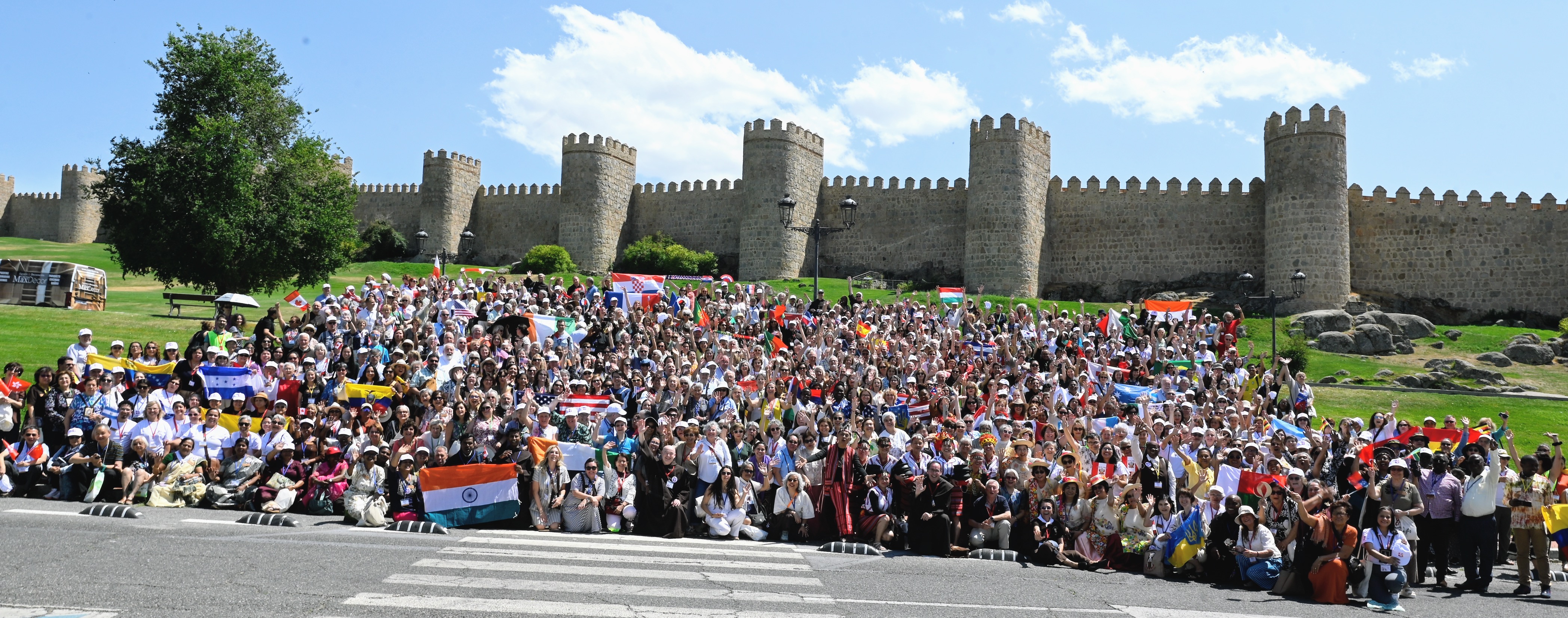
There has been a lot of progress regarding this. There are countries that are implementing wonderful formation programs developed by the OCDS for the OCDS. Some OCDS have become spiritual directors in the Carmelite tradition, others teach Carmelite Spirituality or run retreat houses. I believe that God is preparing them to have a more active role within the Order and in society: they need to understand that they are men and women who are able to be successful in whatever project they undertake. My hope is that the OCDS World Meeting taking place in July 2026 in Avila will help as a platform to address these important topics in the life of the OCDS.
My dream for the OCDS is to see them fulfilled in their beautiful vocation to love and to serve in the Order of Carmel, in the Church and in society. I want to see an OCDS that cherishes their identity and has been able to integrate the life of prayer with their life of fraternity and mission, an OCDS that promotes communion and collaboration within the Order of Carmel and beyond, an OCDS in which all its members strive to be the living stones with which St. Teresa wants to continue to build up the Order and to be a solid foundation for those who will come after them.
The epilogue of the OCDS Constitutions states citing the Dogmatic Constitution of the Church, Lumen Gentium, that ‘in a word, Christians (and Carmelites) must be to the world what the soul is to the body’ (38). May the OCDS in the world be this soul and may they know God by personal experience so that they can become instruments of the love, forgiveness, healing and mercy of God.