Compiled and arranged by Máire Nic Ghiolla Phádraig
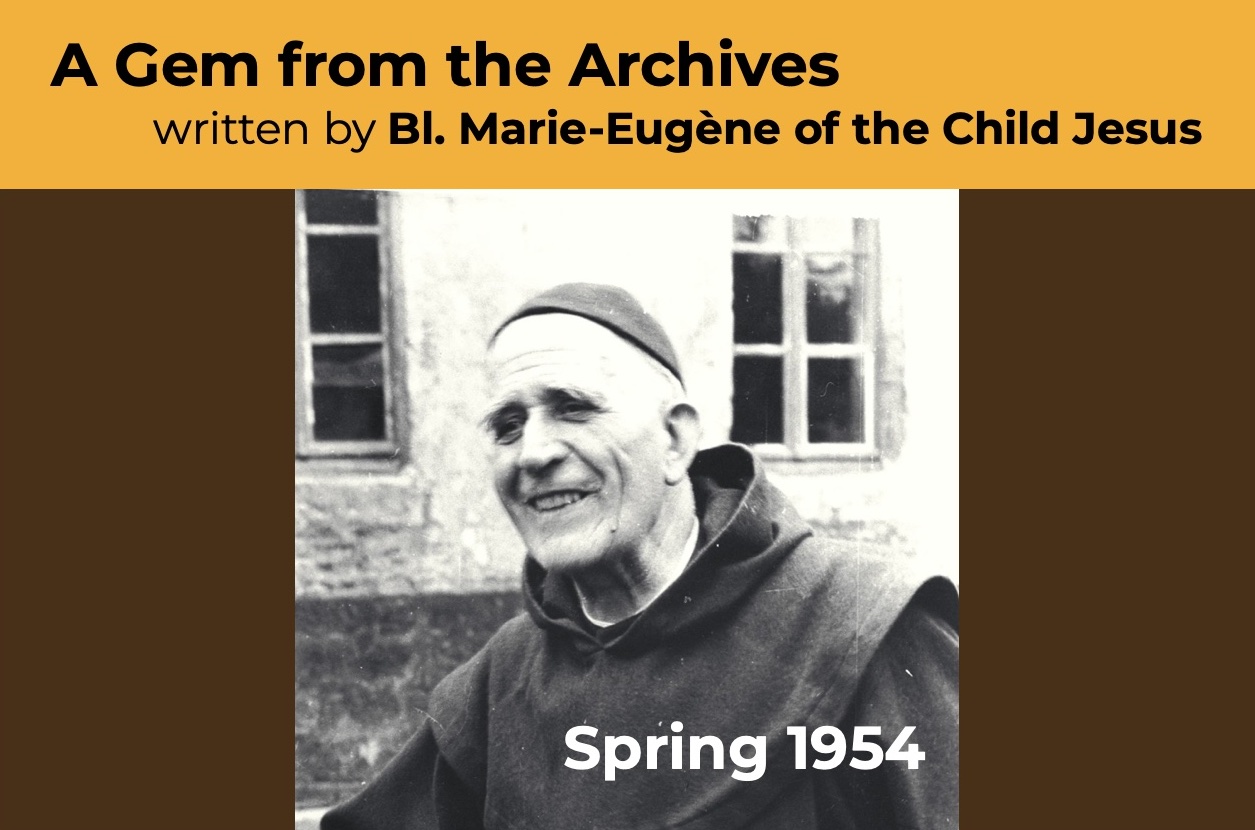
The following presents the story of the Australian foundation of the Discalced Carmelite friars as told by its principal architect, a friar of the Anglo-Irish province. The original manuscript was preserved by Máire Nic Ghiolla Phádraig, whose mother was a close friend of the author. The manuscript has since been deposited in the Archives of the Discalced Carmelites in Ireland. Offering a vivid, first‑hand account of the hopes, trials and providential turns that shaped the beginnings of the friars’ presence in Australia, the memoir is presented with only light editorial guidance. For clarity and ease of reading, the material has been arranged into six interconnected parts with brief subheadings throughout.
This first part recounts the early stages of the Brisbane foundation, beginning with the uncertainty surrounding the new mission, the formation of the team, and the preparations for departure from Tilbury in June 1948. It follows the Carmelites through their seven‑week voyage to Australia, travelling by way of Gibraltar, Port Said, the Suez Canal, the Red Sea, Aden, Colombo, and across the Great Australian Bight. The narrative records the heat, monotony, unexpected incidents, and moments of welcome that marked their journey, leading at last to their first encounters with Australia. What follows is drawn directly from the author’s own account.
At First: On the Way Long Before the Destination Was Clear
I was a conventual in Kensington when at the beginning of 1948, we heard that a foundation of the Order was going to be made in Brisbane. It was all very vague and nobody seemed to have any definite information, but the brethren started to tip me as a likely member of the team, and I responded very willingly to the idea, in fact so willingly that I just about took it for granted that I would be going. One dark afternoon when Fr Pius and I were making our tea together in the post-war basement kitchen, he said to me (he was sub‑prior then): ‘Matthew, don’t be counting your Brisbanes before they are hatched.’
Then came the Provincial Chapter in May of that year. Fr Kevin Neary was the outgoing Provincial. Fr Pius Dolan was elected Provincial. Shortly after the Chapter I received a telegram from him ‘Come to Dublin immediately.’As soon as I arrived, he took me into his room and continued as though we had already been discussing the matter ‘now, who are we going to have on the team? We have settled on Fr Jarlath and on Bro Kieran, but who will the fourth man be?’ When he had talked awhile I asked, ‘Who is the superior?’ and he said, ‘You are.’ He asked me would I be willing to have Fr Jarlath and Br Kieran and I said yes. Then we went through the whole catalogue of names but we couldn’t find the fourth man! Eventually he decided on Fr Cormac Fenton who was still a student-priest and hadn’t as yet done his faculties exam for the archdiocese of Dublin.
So, we got ready to leave from Tilbury Docks, near London, on 11 June 1948. Even still things were vague as to what we were going to. All we knew was that the legalities of the foundation had been arranged and that the Archbishop was expecting us. Little did we know then how vague the Archbishop himself was. And it was only long afterwards we learned that while we were on the high seas the Provincial received a cable from the Archbishop asking that one man be sent out to investigate the possibilities of a foundation. Had that happened, it is unlikely that a foundation would ever have been made. However, we were on the way.
The Long Journey to Brisbane
It was almost seven weeks from the time we left Tilbury until we arrived at Brisbane on July 28th. The English Channel was cloudy and dismal. The ship began to roll a little and a few people got sick. I remember something that took place during our first meal on the ship (the SS Maleja). An Australian lady who was sitting beside me peeled and ate an orange perfectly with a knife and fork without once touching it with her hands! I have never seen it done before or since.
Through the Mediterranean and the Canal and Into the Heat of the Red Sea
We saw the Rock of Gibraltar as we passed through the straits but after that we saw no land until we arrived at Port Said. The weather on the Mediterranean was ideal, comfortably warm both day and night. We couldn’t land at Port Said as there was martial law, so the passengers gathered on deck and bought things from men in little boats below, with the help of rope pulleys. There was much shouting and arguing. One man was diving for coins and storing them in his mouth. After a week at sea one could notice a hum of excitement throughout the ship at the sight of land again. Going through the Suez Canal was rather monotonous as we went dead slow. As we came to the Red Sea I thought that somewhere here the Israelites crossed dry-shod in the time of Moses. From the moment we left Port Said and began to go South, it got hotter and hotter. We had a cabin to ourselves with four bunks on an upper deck. There were four small ventilators in the roof pumping in air. I had one of them blowing on my chest, which made it possible to sleep.
We had been saying Mass each morning in the forward lounge at a central table. This was the first voyage of the Maloja since it was reconditioned after the war, and things weren’t as yet fully organised. It was a migrant ship, all one class. Our Masses followed each other, taking in all about an hour and a half. Concelebrated Mass was unknown then. We got finished before anyone needed the room. We were on second table for meals. I think our breakfast was at 9 am. We had no congregation on week-days, but on Sundays we had a small group and one of us gave them a sermon.
As the weather got hotter the people on the lower decks were finding the heat unbearable at night; so imagine our surprise when one morning we arrived in the lounge to say Mass, to find sleeping bodies all over the place. However, we went to the centre table and started. During the course of the Masses the people gradually awoke, one by one. They would yawn and stretch and look around and then see this strange spectacle in the centre.Then they really woke up and would quietly and quickly gather their belongings and get out. Only one man looked at us, turned over and went off to sleep again.
The last day before we reached Aden was unforgettable. The heat reached an intensity the like of which I never experienced before or since. I don’t know what the temperature was, but 113 degrees in California was mild in comparison. We seemed to be drinking iced orange drinks all day. I got at least one heat blister on the shin, the mark of which is still slightly visible. That night as we lay in bed with hot air blowing on us from the ventilators, a knock came to our door at about 11.30pm. One of the [Geaneve?] crew had died. I went down, deep into the bowels of the ship, and anointed him. Fr Jarlath was with me, as far as I remember. Afterwards came a real treat: the Purser gave us each a large glass of iced orange juice drink. I think it was the most wonderful drink I ever had! At five o’clock next morning we had a burial at sea. The body lay on a plank at right angles to the side of the deck. All we could see was the Union Jack that loosely covered it. The ship’s officers in full uniform stood in rows on either side. I stood at the end to say the prayers, the body being between me and the sea. When the prayers were finished someone tilted up the plank and the body shot out from under the plank and into the sea. We heard a [flop] and that was all.
We heard afterwards that two other people died that night from heart failure owing to the heat, but as they were not Catholics, I was not called to them.
Next day we came to Aden, bleak, hot and dusty. Needless to say, for some time back we hadn’t been wearing black clothes and Roman collars. We had light grey trousers and sports shirts and straw hats. We found some nuns in Aden who entertained us to cool drinks and Irish music. On the way there in a hired car, Br Kieran noticed some dark clouds in the sky and remarked to the driver that it looked like rain. ‘Don’t worry,’ he said, ‘It hasn’t rained here for seven years.’ Between Aden and Colombo the heat wasn’t quite so bad because there was some wind. Still, it was a real suffering, and one just longed for coolness. One felt especially sorry for fat people!
Across the Indian Ocean to Australia
Colombo, with its rich tropical vegetation, was a pleasant contrast to Aden. Here we were entertained by the Good Shepherd Sisters, who showed us round their school where we took many pictures. Then we visited another of their convents, five miles outside the city. Here they had a most unusual kind of church. It was like a wheel with five spokes. At the centre was the sanctuary, and converging on it were five distinct naves, all of which were linked up and enclosed by a circular corridor which could be compared to the rim of the wheel. Each nave was used by a different section of the institution e.g. Nuns, old men, orphans, etc. The weather was still uncomfortably hot, although the sisters said this wasn’t the real heat. It was strange to see bananas growing along by the roadside. According to law, one could eat all one wanted on the spot but not take away any.
Shortly after leaving Colombo, we crossed the Equator with the usual celebrations. This was the longest stage of our journey, nine days from Colombo to Fremantle, the port of Perth. After crossing theEquator we found ourselves gradually passing from Summer into Winter. Just outside Fremantle we waited and watched from deck as another passenger ship passed us on the way back to Europe. A lady beside me said ‘Would you like to be going back on that?’ ‘Not until I have done something,’ I said. The weather at Fremantle was like a mild, rainy, winter day at home, but it wasn’t actually raining when we arrived. It was about an hour’s journey by bus to Perth. In contrast to the hot Middle Eastern countries through which we had passed, Australia seemed like being home again, especially on a mild winter evening, and the people, too, seemed much the same. We enquired for the nearest Catholic church, and the priest there directed us to the Carmel – its convent at Nedlands. Here we were received with great welcome. They felt it was a historic occasion and that they were privileged to be the first to greet us. We had visited a Carmel at Colombo, in a beautiful tropical setting, where we were received with the politeness and friendliness that one offers to respected strangers. But in Australia it was different. Here we were received as the answer to prolonged desires and prayers. The coming of our Friars to Australia was a big thing. It was raining heavily when we arrived at the Carmel and we didn’t have much time to spare. We had a chat with the sisters in the parlour, and they gave us a magnificent meal, and they didn’t consider that we were bound to abstinence! Then they sent us back by car to the boat, where we were soon to begin the next stage of our voyage, namely to Adelaide.
The ship rolled a bit going across the Great Australian Bight. As we sat at lunch one day I suddenly saw a wall of water outside the porthole. Then the ship heaved and plates went all over the place, and all over the dining hall there was a little shriek of frightened excitement. For the next couple of days the ship kept rolling and there were quite a few people absent from meals. One of our group was sick in the Bay of Biscay, and another in the Bight. At Adelaide we just had time to visit the Carmelite Convent, and the only thing that stands out in my mind is the intense feeling in the welcome we received.