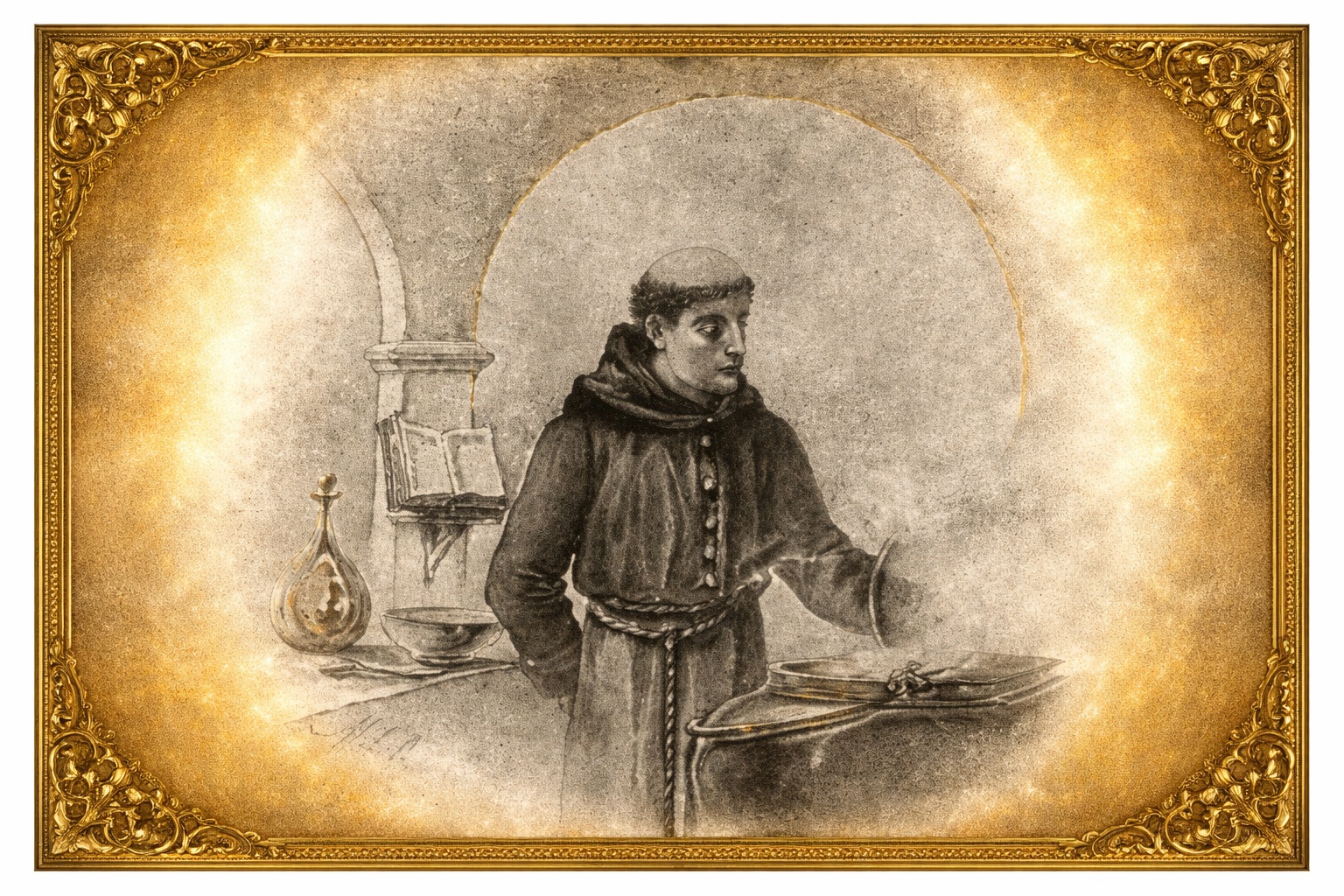
This afternoon I set aside a few minutes from my work as managing editor of ICS Publications, currently preparing the third volume of The Complete Works of St Elizabeth of the Trinity for typesetting. The manuscript lies open on my screen while I paste in design tags for the designers, so they know how to handle the unusual format of Elizabeth’s diary entries. Messages ping and flash in the corner of my screen from our warehouse—we recently moved to a new fulfilment provider—asking whether they should wait for more inventory before sending a pallet-sized wholesale shipment to Amazon. We have only four days to accept and ship their order.

Earlier in the day, I answered several emails from two commercial printers about the status of reprints currently in production. A philosophy professor wrote to ask whether our translation of St Edith Stein’s Essays on Woman might deserve revision as we continue the new critical English edition of her works. I spend two hours proofreading a revised edition of the third volume of The Collected Works of St Teresa of Avila. The Postulator General in Rome is waiting for an update on how we want to proceed with a new English Carmelite Missal for the United States. At first glance, these tasks may seem far removed from the contemplative spirit of Carmel, but they are integral elements of the same apostolate: ensuring that the words of our saints continue to reach new readers.
After dinner—usually the only time of day when the stream of messages finally quiets—I return to the more textual side of my work: at present, this is a translation I’m working on. One sentence of St Edith Stein has held my attention for nearly half an hour. In a single line she uses the words sich formen, sich bilden, Gebilde, and Bilde. Rendering them in English requires care: perhaps ‘shape itself,’ ‘form itself,’ ‘a formed whole,’ and ‘images.’ The sentence slowly comes into focus.
No two days as managing editor of ICS Publications look the same. From the outside, the work I’m doing on this particular day may seem rather technical—tagging manuscripts, managing warehouses, dealing with Amazon while editing, translating German—but approached with the right mindset, this work becomes a way of living Carmel in daily life. It’s easy enough to see how spending each day immersed in the writings of our saints might shape a Carmelite heart. But I must also remind myself that the saints themselves had days not entirely dissimilar to mine. St Teresa Benedicta published multiple volumes of translations during her lifetime, at times with only a half hour each evening available for the work. St Teresa of Ávila composed hundreds of letters, sometimes writing multiple copies of the most important ones. In the earliest surviving manuscripts of his writings, we can still see the handwriting of St John of the Cross scribbled in the margins offering revisions for the copyist. Our saints prayed, but they also wrote, translated, revised, and corresponded. To do the same work is, in a way, to enter into their own daily life.

The Carmelite tradition is distinctive in its literary character. From the very beginning, St Teresa’s reform was carried forward through the written testimony of a woman struggling to express the mystery of God’s work in her soul. She wrote partly to understand her own experience, but also because she possessed the charism of a teacher and the desire to guide others along the same path. St John of the Cross followed suit. Gifted with poetic genius, he soon found himself surrounded by readers who wanted explanation and deeper instruction, which he gladly provided in his careful spiritual prose. St Thérèse of Lisieux obediently composed the simple narrative of her childhood in Manuscript A, yet within it she hid a message of confidence and love that has led countless souls along her ‘little way.’ These writings—and many others—carry the interior life of Carmel from one generation to the next.
My apostolate in Carmelite publishing is deeply rewarding because the work itself resembles the daily labours of the saints whose writings we share with the English-speaking world. When I spend half an hour wrestling with a sentence in one of Edith Stein’s essays, I am not only reading her words, but I am also entering into the same careful discipline of translation that occupied her own evenings.
St Teresa of Ávila made several revisions of The Book of Her Life and resorted to dictating letters to her sisters when her hands could no longer keep up with the demands of her heavy correspondence. St John of the Cross returned to his poems several times throughout his life, offering new examinations of their meaning in his prose treatises. St Edith Stein translated the works of St Thomas Aquinas into German, wedging the time-consuming work between an academic career and a rigorous commitment to prayer. These works did not miraculously appear fully formed. They emerged through steady and sustained attention to detail—through reflecting, drafting, reflecting again, and then revising, perfecting, and finally sharing them with others.
To work as an editor and translator within our tradition is therefore more than simply preserving and transmitting the words of our saints. It is also to share in the same effort of expression that never comes easily to the soul seeking to understand its life with God. This effort requires patience and humility—virtues I too often lack. Yet if I can muster up a little willingness to sit down with our saintly authors until their meaning slowly emerges in English, each project becomes a quiet apprenticeship in the shadows of our Carmelite masters. I discover their meaning and their English voice, but I also begin to practice, albeit in a much smaller way, their craft of spiritual expression.
It is here that a more intimate encounter with our saints begins to take place. They speak profoundly through their words, but they become my spiritual masters when they draw me into their work. So much can be gained from reading their writings, but as an editor and translator I have begun to experience a bit of the same tension they faced: the desire to express adequately the mystery of God’s action in the soul and the difficulty of finding the right words. The more time I spend living in these texts, the more I realise that their authors cannot be seen simply as mystical geniuses—though they surely are—but also as human beings and fellow labourers who wrestled with language, racking their tired brains to make their interior lives both intelligible and breathtakingly inspiring.

Photo by Mitchell Knighten
From a purely secular perspective, the intricacies of tweaking and revising critical translations of centuries-old spiritual texts might appear to be a marginal or antiquarian task. But this work is never done for its own sake. We fail when we forget that our saints wrote because they believed that what God had done in their souls might become a light for others. Their words were intended to travel—to pass beyond the walls of the cloister, across the boundaries of time, and through the barriers of language.
That is precisely what this apostolate seeks to accomplish and therein lies its deeper significance. The philosopher Emmanuel Levinas writes that language is the place where one person encounters another across a distance that can never be fully overcome. In written testimony we do not possess the full experience of the other person, yet we are nevertheless addressed by it. The testimony we read demands something from us: listen to me, understand for yourself, and allow it to change your life.
When we read our saints’ writings, their voices emerge from another time and place—another culture, another set of circumstances. Yet their words address us directly, precisely because we have taken up their book to read. Editors and translators stand in the middle of that encounter. Our task is to receive those words carefully and allow them to speak again with clarity and integrity for readers living in what may appear to be a very different world. And yet I maintain that when this apostolate succeeds, our world does not seem so different from theirs.
I was reminded of this responsibility just this past weekend while giving a retreat for a group of college-aged young men in Alabama. In one of my talks, I tried to explain St Teresa of Ávila’s famous description of the four waters of prayer. Teresa’s metaphor was born in the agricultural world of sixteenth-century Spain—drawing water from a well with a bucket or a water wheel or channelling it through aqueducts. Standing before a hundred young men whose souls are being pulled in every direction at once—by the noise of their phones, the pressure of their studies, the expectations of their peers, and the deeper confusion of what it means to become a man in 2026—I realised again what is really at stake in this apostolate.
Our task is not just to preserve these writings as historical artifacts, but to allow them to speak again and captivate the hearts of a new generation. Teresa’s four waters must somehow ‘flow’ from the pen of a sixteenth-century Castilian nun into the imagination of young people in the twenty-first century who are encountering the wisdom of Carmel for the first time. This transmission requires translators, editors, designers, printers, and preachers working to help our saints bridge centuries.

When this work succeeds, something miraculous happens. The words of a saint once again address living persons. Hearts are drawn to Christ and toward the interior life of prayer. A mystical encounter that began centuries ago continues in the life of someone reading those words for the first time.
When that happens, St Teresa’s world suddenly feels less foreign to our own. One of my favourite lines from the retreat weekend, delivered by one of the students, captured the point perfectly: ‘Nothing makes the devil shake in his boots more than a nineteen-year-old frat boy[1] who’s given his life to Jesus.’ The truth behind that line is not very different from Teresa’s own insight in chapter 39 of The Way of Perfection: ‘For since the devil sees that he is dealing with a soul that can do him harm and bring profit to others, he uses all his power so that [the soul] might not rise.’ These two statements—uttered nearly a half-millennium apart—express the same conviction: God is not finished raising up determined souls who will frustrate the designs of the enemy through their commitment to prayer and love of neighbour.
Tomorrow I will turn on my computer and begin again the same quiet work—editing manuscripts, answering emails, handling Amazon issues, and wrestling with the next stubborn sentence of St Edith Stein. From the outside, it may still look like technical labour. Yet framed within the Carmelite apostolate, this work participates in something far greater. The saints of Carmel wrote so that their experience of God might find resonance in the hearts of those who walk in their footsteps. My task is simply to make sure their voices are still heard. And when their words once again awaken friendship with God in a new soul, this hidden apostolate has quietly fulfilled its mission.
[1] Likely familiar to American readers, a ‘frat bro’ is a stereotype for a member of a male collegiate fraternity, ubiquitous on American university campuses. Generally, the stereotype is negative, but the student who said this was pointing out that such persons have a powerful social influence that, utilised positively for the faith, would have a remarkable positive impact on other students.