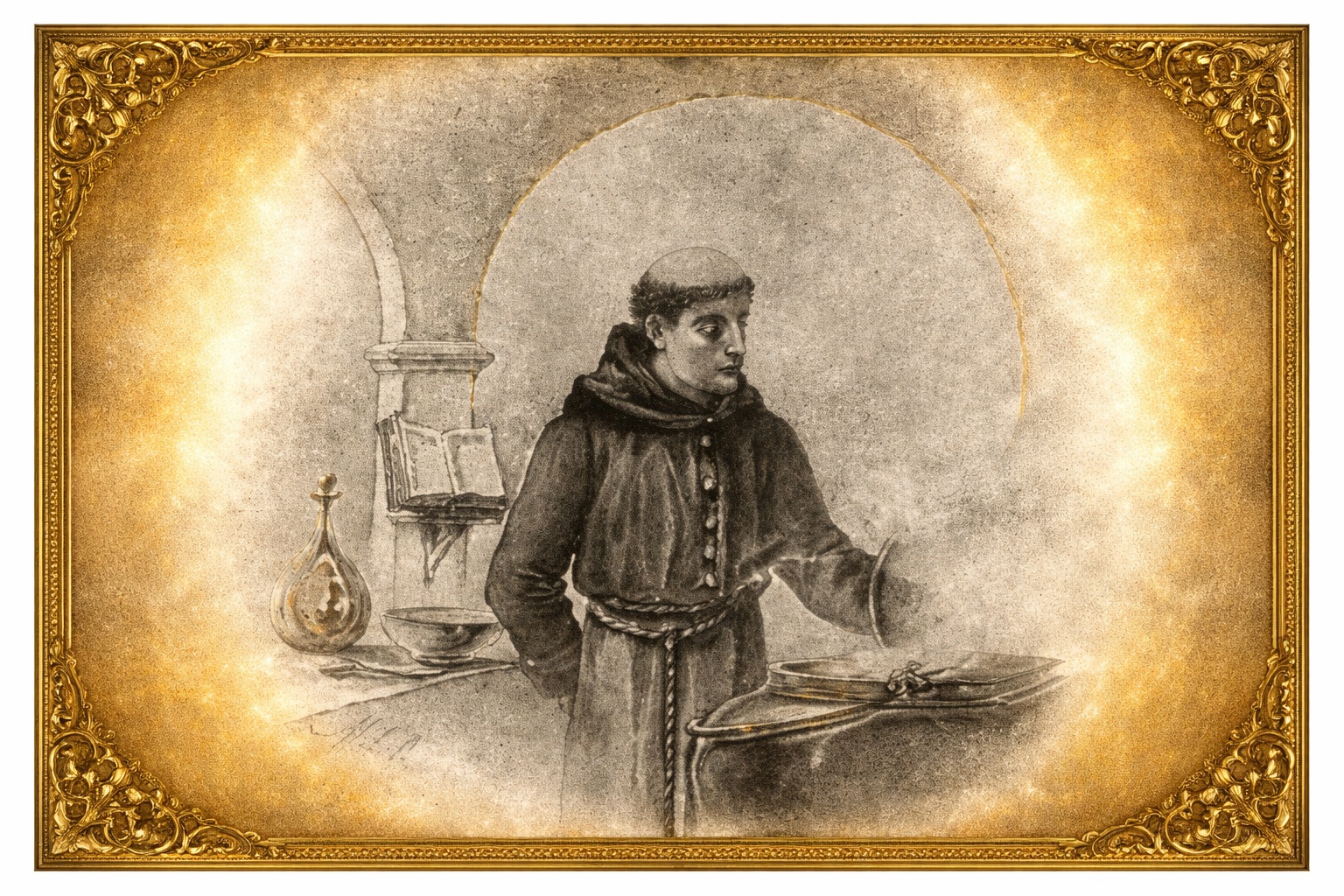
I was inspired to be a priest by a Jesuit and encouraged to be a Carmelite by a Benedictine. I shall be eternally grateful to both. I had thought then that being a Carmelite meant living quietly behind high walls, but I was wrong. Much of my life in Carmel has been spent in busy parishes. This year, I am celebrating fifty years as a Carmelite.

Not long ago it was thought that you could not be a proper Carmelite and work in a parish, even though most of our friars’ houses in the Order are based in parish communities. I suppose the thinking behind this was the seeming incompatibility of a life of prayer and that of a busy priest: how could a Carmelite maintain a regular life of prayer with all the demands of ministry? There is no doubt that there is a tension between the two, but where there is a will there is a way. If you want to lead a life of prayer then you will, and without compromising your pastoral ministry. You have to want this, as it doesn’t come easily. No matter how busy you are in a parish, prayer and community life need not be compromised.
I can say in all sincerity that I love being a priest in a parish. I love the opportunities it gives to preach the gospel of Jesus Christ. Sundays are special days when many people come to the church. I can share with our parishioners all I have learned about God in Jesus Christ. Over the years I have imbibed the teachings of our holy parents, St Teresa of Ávila and St John of the Cross, as well as of St Thérèse of Lisieux. What I preach at Sunday Mass has been formed by what I have learnt from them. What I have learned is what people in the pew are looking for: the love and mercy of God. I want to tell them how we are called to friendship with Christ.
St Teresa was a wonderful human being, and in many ways she is my role model, with her love of God and humanity, her love of Carmel, her common sense, her teaching on prayer and humility. She was very busy for much of her life in Carmel, yet she always put prayer and community first. She and John taught me to pray, and to discover the hidden treasures that lie within each of us. In a busy parish there is a great demand on your time. Taking time out to pray can seem a waste of time when there is so much to be done. As an extrovert, the hours of silent prayer and being alone in my room didn’t come easily, but Teresa’s teaching and example have formed my life as a priest and Carmelite.
All the sacraments are opportunities to tell people about the love and mercy of God. When I hear confessions, I remember what St John of the Cross said about listening to what the Holy Spirit is doing in the penitent, that the Holy Spirit, and not the priest, is the real confessor. Some people, conscious of their sins, fear death and particularly the final judgement. When I meet with this, I tell them what John of the Cross said, ‘at the evening of [our] lives, we shall be judged on [our] love.’[1] What a beautiful insight.
Funerals can also be good opportunities for sharing with people my Carmelite spirituality. At such times people are at their most vulnerable, but for that reason receptive to hear the comforting words of scripture. I often tell mourners about St Thérèse of Lisieux and what she said shortly before she died, ‘I am not dying; I am entering into life’, and again, ‘death is not the end, but the beginning of something new and wonderful.’
Another area of ministry that is important is the celebration of baptism. In modern times large numbers of family and friends attend these events; when I was baptised, by contrast, there were just three people present. So once again it is an opportunity to share one’s faith that has been nurtured in Carmel. Baptism is the first sacrament; it only lasts about twenty minutes, but in that short time the baptised child is transformed into a child of God. At a recent baptism, someone fed back to me what one of those present said, that I seemed to believe what I was saying. This is as it should be.
I think Carmelite spirituality is ideally suited for priestly ministry. It is a great gift to the Church and for the Church’s life. Lived well it helps one to be that kind of priest who ‘smells of the sheep’, to quote Pope Francis.[2] In other words, one who knows his people. I used to think that being a Carmelite meant I would be different from other people, that I would be on a different level. But over the years I have come to realise that I am essentially no different. I am an ordinary person who believes in an extraordinary God. What has kept me down to earth and in touch is the teaching of St Teresa on humility; knowing yourself, your strengths as well as your weaknesses. Like her, I understand what it is to be human with the potential for sin or for holiness. I will never be perfect but with God’s help I will always strive to be humble. St Thérèse’s teaching on grace has also been a great help to me; ‘all is grace’ she once so famously said. That God chose me to be a Carmelite and a priest is a grace. It was given to me for a purpose, which is to tell my parishioners what I myself have discovered through prayer, that the God we all believe in is a God of love and mercy.
[1] Cf. St John of the Cross, Dichos 64, as quoted in Catechism of the Catholic Church, §1022. See also ‘The Sayings of Light and Love,’ no. 60 in The Collected Works of St John of the Cross, trans. Kieran Kavanaugh, OCD, and Otilio Rodriguez, OCD (Washington, DC: ICS Publications, 1991), p. 90.
[2] See the Chrism Mass Homily of Pope Francis (28 March 2013).