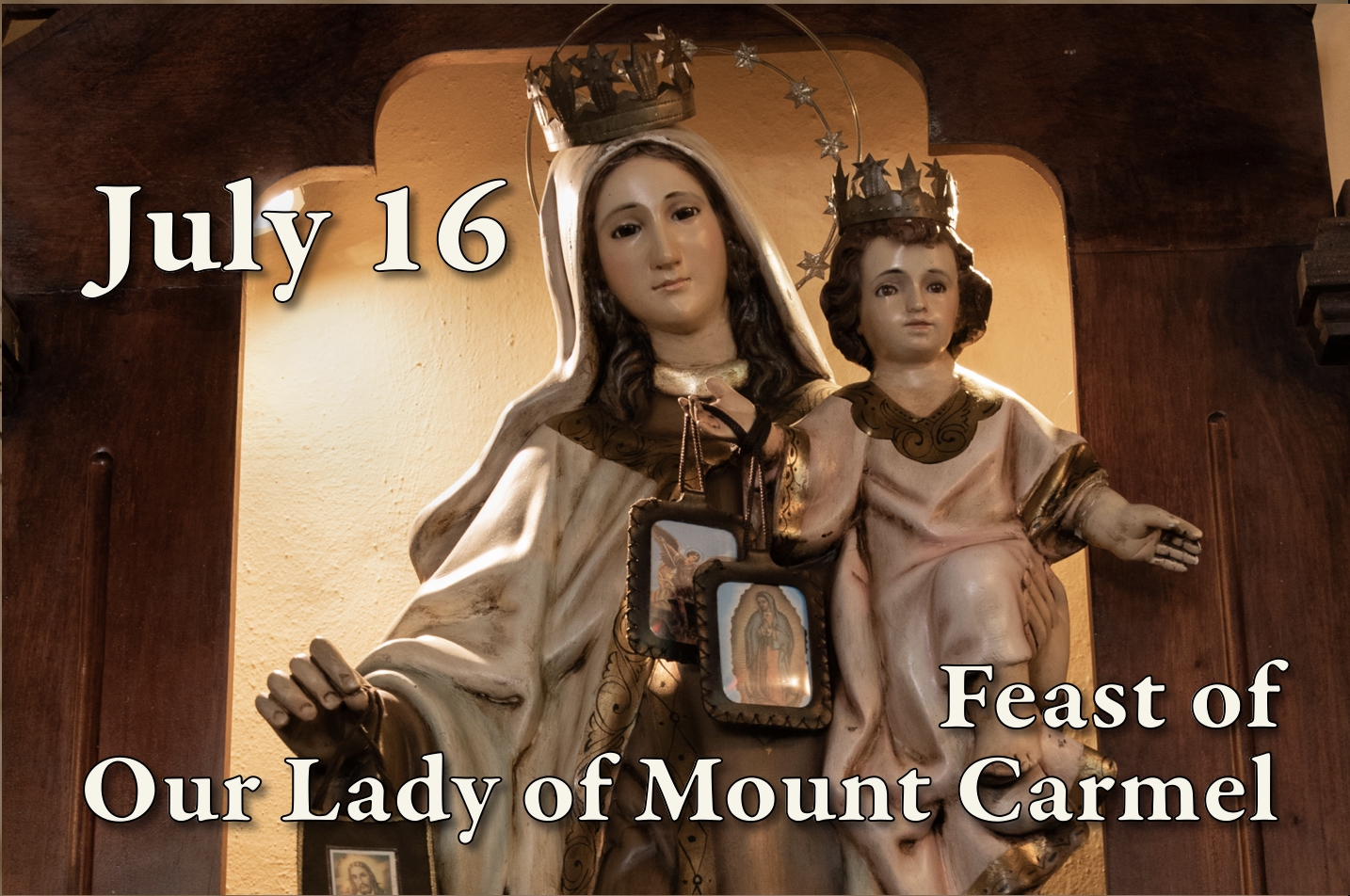
'And the Word was made flesh, and he lived among us, and we saw his glory.' (John 1: 14)

'Something which has existed since the beginning, which we have heard, which we have seen with our own eyes, which we have watched and touched with our own hands.' (1 John 1: 1)
The Mother knows who he is. She has held the Child in her arms, tickled and kissed him, washed and nursed him, carried him about and dangled him on her knee… She knows the feel of his skin, the curve of his heel, the gurgle of his laugh. His unskilled little hands pulled at her hair, at her nose. He sucked her breast, her fingers, her chin. When he was hot, his face and hair were damp. When he was cold, his little nose was an icy berry set above bluish lips. His little ears were small and perfect, and the point where his shoulders became the beginning of his neck, seemed so wise, so vulnerable, that looking at him, she would have to stop for a moment and collect herself.
And years later he became famous. She could not follow, and most of the time, she fed herself on accounts from strangers passing through the village. The crowds, they said, pressed upon him all round. ‘They compassed him about; they compassed him about like bees’ (Ps 117: 12). He could not even eat in peace, and slept just anywhere, wherever he happened to have arrived to preach and heal. His friends, though, in all the jostling of daily life, were acquainted with his height, his strength – the competence of a carpenter’s fingers, the depth of his eyes, seeing further than mere horizons; the tone of his voice which, somehow, carried very far though it was seldom raised. There was something about him which challenged them, and yet made them feel both secure and happy. They feasted on his presence day after day, aware of his holiness and welcome and love.
To outsiders, he was an enigma and a threat. And when at last he allowed himself to fall in their power, then, a long sigh of satisfaction – they explored and tested their unresisting prey. ‘Let us test him with cruelty and with torture and thus explore this gentleness of his and put his endurance to the proof. Let us condemn him to a shameful death…’ (Wisdom 2: 19-20). Where did his serene calm reside? He must, he must be shaken somehow. He must be made to curse and rave in torment like all prisoners before him. Did he think he could escape? Did he think he was so different? Let babbling fear and anger unhinge him. Even God, they thought, God who had been blasphemed by this man who pretended to be God’s Son, would never deliver this man condemned to a tortured, shameful death.
And still he eluded them. All his flesh was bruised and bloodied. He could hardly move for the pain, burning and tearing his ragged skin. So, they invented another obscene torment, the culmination of their rejection. And laughing and jeering, they crowned him with long, curved and vicious thorns, which they had twisted with leather gloves to save their own hands. Then with a stick, they beat it into his head. As the blood flowed, the skin was lifted and pierced through, till his eyes were blinded with blood and his hair turned stiff and red. And to perfect this mocking, they presented him thus to the crowd.
And the crowd roared. It was too much. So many had believed in him and hoped that he was the Messiah. And it turned out that he was yet another trickster, a fraud. If what he had said were true, he would not be in that state now. How could he, how dare he raise their hopes when all the time he was lying? Yes, they shouted, he really deserved to die, and they wanted their revenge – save for a few whom he had healed, and for his Mother who looked and wept and walked with him from within the crowd. Hate and blows, screams and spit accompanied him all the way to Calvary. He accepted it all, nothing in him resisted. Though his body screamed in pain, he never even moaned.
And when they had laid him on the cross, pushing his pierced head against the wood, he surrendered his arms. They pulled, they pulled hard and knelt on the elbows as they hammered the nails through. The tendons tore, the hands looked like curved claws. Then they pulled on his legs, one foot on top of the other, and the long nail went through the dusty feet, a large and pointed nail strong enough to bear the weight of the trembling body. The sign of condemnation was added above his head, and then the cross was raised.
'When you have lifted up the Son of Man, then you will know that I am He' (John 8: 28)

'And when I am lifted up from the earth, I shall draw all people to myself.' (John 12: 32)
It lasted hours, in the wind and the light and the clouds of flies. The best were ashamed and aghast that any man should be so treated. The worst stood and enjoyed the spectacle of their vengeance. But he forgave them all and prayed for them. The disjointed body, that they had tortured with satisfaction and glee, confounded their expectations. Their prey had mastered them as it suffered and died. And his mother saw it all and remained with him, sharing in the shame, and her intent was completely joined with his, though no one else understood it at the time.
When it was dark midafternoon and the cold storm had come, he died. And the soldier administered the regulation coup de grâce. The point of the lance is introduced between two ribs, cutting the lungs as it goes, until it reaches the heart. The soldier could feel the organs give way and split apart as the lance was first forced in and then roughly withdrawn. And he knew that the poor man was finished at last, if he hadn’t been before. ‘And immediately there came out blood and water’. Then the soldier collected his tools of torment and departed. And the Mother… ‘He is destined to be a sign that is rejected, and a sword will pierce your own soul too’ (Luke 2: 35). You cannot pierce the Heart of the Son without also piercing the heart of the Mother…
The few friends who were left took the poor, brown red, dried up body down. They removed the encrusted crown and delivered the dead man for a moment into the open arms of the Mother who bore him. Ah! She rocked and kissed him at last, held him against her breast, crying out in distress to heaven. Then they quickly enveloped him in burial cloths and placed him in the rock chamber. With a common effort, they sealed it with a giant millstone and left.
It was this body that Thomas saw, alive and radiant, with its great wounds clear and open. At first, he had refused to believe it but now, he found out for himself. He followed the invitation; he obeyed the order. Yes, he did touch the wounded hands, discovering with his fingers what his eyes could not accept. And when at last his fingers explored the open wound at the side, a long gash with a dark space separating the edges, then Thomas believed. At that moment, he saw even more than Peter: he knew that here was God himself, made man, and master even of death. ‘My Lord and my God!’ (John 20: 28).
Ah! Thomas, in your mistrust of hysteria or fraud, you did not silence your need for proof and evidence, and trusted God enough to say so. And when you were invited to see for yourself, you did not draw back, suddenly shamed into timidity. Through the offered, new, empirical evidence, you learned to know and to believe. You looked at a man who had died and was risen by his own power, you touched the fatal injury for yourself (on our behalf, for all time), and discovered that you were touching God, given over for us forever: Jesus, the Son of God incarnate. ‘You believe because you can see me. Happy are those who have not seen and yet believe.’ (John 20: 29).
And we also can touch him, in the Eucharist, when we receive the consecrated Host in Holy Communion. ‘Præstet fides supplementum sensuum defectui. Let faith provide a supplement for the failure of the senses.’ (Tantum Ergo, St Thomas Aquinas). Happy are we who, by the grace of God, believe.